Gradients: Adding Depth and Dimension to Your Typography
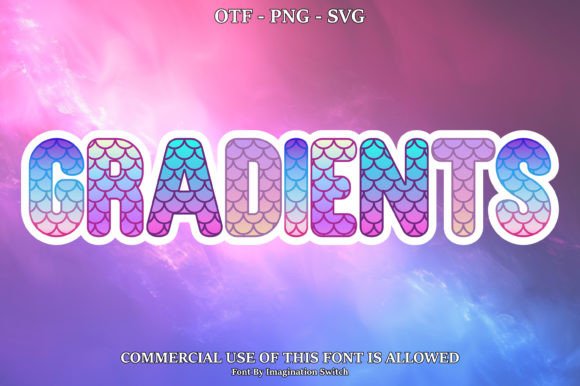
Typography is rarely just about the letters themselves; it’s about the feeling they evoke. When you encounter a font that uses color within its very structure, it changes the game. Gradients is a captivating typographic creation that does exactly this, utilizing intriguing colors to enhance its visual appeal. Unlike standard typefaces that rely on a single flat hue, this font incorporates a mesmerizing visual touch directly into the design, making each word and number stand out before the reader even processes the meaning. It is a complete set of characters, including uppercase, lowercase, and numbers, meticulously designed to provide flexibility across various types of projects. If you are looking to introduce uniqueness and creativity to your designs, Gradients offers a built-in solution that eliminates the need for complex post-processing.
The Personality of Chromatic Typography
When we talk about Gradients, we are discussing more than just a premium font; we are looking at a piece of design asset that carries its own mood. The carefully chosen colors for each character add a layer of sophistication and energy. Because the color transitions are embedded in the letterforms, the font maintains a consistent look across different applications, whether it is used in digital environments or print media.
From a brand identity perspective, using a font like Gradients signals that a brand is modern, playful, and unafraid to break conventions. It works exceptionally well as a display font because its primary goal is to catch the eye. It is not a sans serif font meant for body text, nor is it a traditional serif font for long-form reading. Instead, it sits in the category of creative font options that serve a specific purpose: to make a statement. Whether the color scheme is pastel, neon, or metallic, the effect is the same—it adds depth and dimension that flat typography simply cannot achieve.
Strategic Applications for Maximum Impact
For entrepreneurs, marketers, and small business owners, the challenge is often finding ways to stand out in a crowded marketplace. Gradients can be a powerful tool in your arsenal for specific applications. Consider logo design; a wordmark utilizing this font can instantly convey a sense of innovation. In packaging design, the font can highlight product features or flavor variations if the gradient colors are customized to match the product line.
In the realm of web design and social media graphics, attention spans are short. You have seconds to stop a user from scrolling. Using Gradients for headlines or call-to-action buttons can significantly boost audience engagement. The visual hierarchy is naturally established because the eye is drawn to the color movement within the text. However, readability remains paramount. It is crucial to ensure that the gradient effect does not obscure the legibility of the letterforms, particularly on smaller screens or complex backgrounds.
Pairing and Practical Usage
No font exists in a vacuum. Font pairing is essential when working with a distinct typeface like Gradients. Because it is visually busy, it requires a calm partner. Pairing it with a clean, geometric sans serif font for body text is usually the safest bet. This contrast ensures that your headers pop while your supporting text remains easy to read. Avoid pairing it with a script font or handwritten font, as this can create visual chaos and make the layout feel cluttered.
When evaluating this font for a project, consider the context. It is perfect for:
- Editorial design headlines for fashion or tech magazines.
- Event invitations where a festive or modern vibe is needed.
- Apparel design such as t-shirts or tote bags.
- Digital advertisements requiring high visibility.
However, it might not be the best choice for formal legal documents, extensive academic papers, or minimalist designs that rely on strict whitespace. The strength of Gradients lies in its ability to add personality, so it should be used where personality is an asset.
Making the Decision: Is Gradients Right for You?
Before integrating Gradients into your workflow, it is wise to conduct a few tests. As a commercial font, you want to ensure the investment pays off. Start by typing out your specific headline or brand name using the font. Does the color transition flow well with your specific letter combination? Sometimes, certain letter pairs can create abrupt breaks in a gradient if not handled well by the designer.
Check the included styles. Does the font family offer different weights or variations that allow for versatility? Review the licensing terms to ensure they cover your intended use, whether for personal projects or large-scale commercial distribution. Finally, look at the technical aspects. If you are using this for web design, check the file formats provided to ensure compatibility with modern browsers.
Ultimately, Gradients is about injecting life into your text. It bridges the gap between typography and illustration. For designers, bloggers, and content creators looking to elevate their visual storytelling, this font provides a unique way to captivate an audience. By using it thoughtfully and pairing it with complementary typefaces, you can create designs that are not only professional but also unforgettable.